
Trigger Warning: Parental sex, parental libido, implied parental sexual knowledge
Like any teen, presumably, I was interested in sex: if/when I’d have it, what it would be like, how I’d negotiate the whole weird series of scenes that I imagined it to be. And like any other teen (again: presumably), I took any available opportunity to educate myself with whatever materials came to hand.
The house in which I grew up was loaded with all sorts of great source material, and I mined them assiduously. These materials were not always
the most direct or relevant to my eventual sexual experiences (from my vantage point now, I am disturbed that they could be relevant to anyone’s sexual experiences), but they (the materials) certainly had their own 1960/1970s slant.
My Sources
The shelves in my parents’ bedroom held the richest vein, bearing the then-classic books. These were of limited interest as actual reading material. They were self-indulgent, often misogynistic, and almost always stupidly written, classics though they may have been: Candy (Terry Southern); Dan Greenberg’s Scoring (the title says it all); and Gore Vidal’s Myra Breckinridge.

These books would be deemed intolerable today outside of Women’s Studies college coursework (English 102: The Promotion Of Rape Culture In Actually-Published Books In The 1960s And 1970s. Prerequisites include tolerance for inanity, as well as the ability to control one’s personal rage in an academic setting over what will be called, in the distant future, the #metoo movement), but back then they were acceptable to my 10-year-old self. These books were generally novels and memoirs that required one to slog through stultifying prose that had lots of perfectly good words looking around for something useful to do, before reaching any real sex bits.
Magazines were more useful. My dad subscribed to Playboy magazine for the excellent articles, but I liked the cartoons. As I grew older I found the pictures increasingly informative and, as the years passed and the photos became more explicit, reassuring. Things made more sense. Thank you, all you bastards at Playboy!
The boys next door, my daily playmates (the term bearing no relation to this Playboy thread) until I went away to college, also enjoyed my father’s Playboys, which were shelved, openly and without any efforts whatsoever to hide them, on the table next to his lounge chair in our family room. It was easy to grab the latest issue and whisk it away to the upstairs, away from any parent’s critical gaze or comment. In retrospect, even the precaution of removing the magazine to a less central place was an unnecessary one.
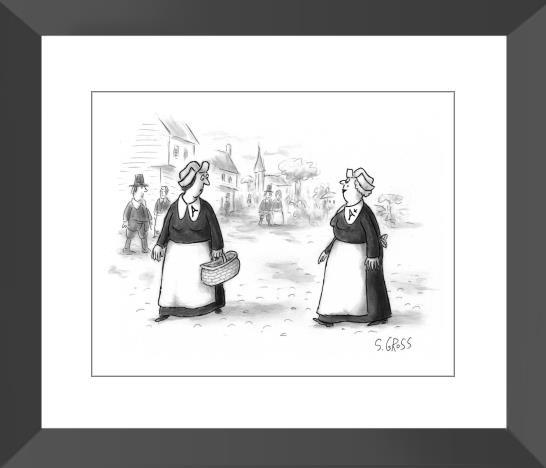
It was an education as well as entertainment for the neighbor boys and, apparently, at least one of my sisters, although less for the sexual information. This sister’s 8th grade English teacher showed a cartoon in class one day that referenced a book they were studying, The Scarlet Letter. In this cartoon, a Hester Prynne stand-in walks about the village among other women branded with the scarlet A, but she sports a scarlet A+ on her collar as well as a satisfied smirk. The English teacher stated that she had found the cartoon in Esquire and my younger sister corrected her, informing the class that it was actually from Playboy (it was). Teacher was not amused and off went my sister to the principal’s office.
My dad’s magazines were pretty one-dimensional in their very two-dimensional representations of 3-dimensional women, and I needed more. Always a voracious reader, my attention encompassed my mother’s magazines, all of which were the ones marketed to women. My mother read the two local city papers, the Wall Street Journal and the NYT, as well as Time magazine. She was very well-informed and up-to-date with local and world news. But she faithfully bought each new issue of Women’s Day, Family Circle and other women’s magazines which were, like the menstrual period that I was obsessed with getting, monthly additions to the household.
(The) Mother’s Lode
It was, however, Cosmopolitan magazine that inevitably became my particular favorite.
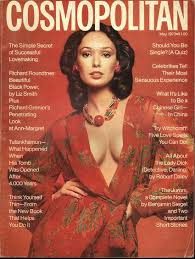
Cosmopolitan Magazine: For women who want to take power over their sexuality so that they can better please men.
It had sexual content – explicit sexual content – and I would read/study it with avidity. Its articles and quizzes were an education, and I was a motivated student. Not being what one would call “a looker” as a girl and then adolescent, I figured that I had to content myself with doing more looking than licking, and I prepared myself for what I assumed would come when I finally did “get my man” (I didn’t entertain the possibility that it might not be a man).
I assume that I was not exactly the target audience for Cosmopolitan: I was 11. I began to care less about the menstrual cramps that would eventually be mine and more about how to have and enhance my own (multiple) orgasms. I studied up on how to drive a man wild in bed without actually understanding why I’d even want a man in my bed – a naked man, no less – still being unable to comprehend wanting to be in such an odd situation, much less touch them in any personal sort of way. I assumed that there was some rhyme or reason to it, and instinct would kick in should I find myself so disposed. At that point I would be more than ready to light the fireworks with my superior knowledge, gleaned at Helen Gurley Brown’s knee.
Yes, Ms. Brown informed my attitudes towards sex and sexuality, but mainly as a counter to hers which were, to be fair, of a certain time and certainly not timeless. I confess, I couldn’t bear to slog through the whole of Sex and The Single Girl in my early ‘20s. I was too preoccupied with being contemptuous of her cringeworthy, infantilizing tone (“Mouseburger”?!? Really??) as well as her perspective on what consisted of being a ‘liberated woman’ at that time, To wit: isn’t being chased around a desk by one’s male boss actually a compliment, as Brown urges her reader to consider it, and nothing to get hung about? It made me wonder what she really thought we were liberating ourselves from. Her ideas were looking in the right direction but I was so much more critical then, not the mellow sort I am now. To give Helen Gurley Brown credit due, however, she did provide necessary impetus to many women to take power and take action as they saw fit. A friend of mine said that the book got her “to get off of my ass” – the exact same words I used that same year when a post-doc groped me in my office. Symmetry!
All told, I am grateful to my teachers at Cosmo and to my mother, who admitted some limited knowledge of my use of this source material. The information I harvested may have had its drawbacks, but it more than served its purpose. And no, it is NOT quiz time.
 I Started the Prozac In Paris